Part One of the Cultivate Sthira Series
Why This Conversation Matters
One of the things I speak about often in class is that yoga is so much more than physical poses linked together for an hour.
Yoga is not simply learning Sanskrit names, touching your toes, improving flexibility, or creating an impressive shape with the body.
Those things can be beautiful expressions of practice — but they are not the practice itself.
The deeper invitation of yoga is to cultivate awareness.
- To become more present.
- To become more resilient.
- To develop the capacity to meet life as it unfolds.
This text comes from the Hatha Yoga Pradipika, a foundational text of Haṭha Yoga written approximately during what historians would place around the High Renaissance period of Europe. While Europe was exploring humanism, art, architecture and scientific discovery, yogic traditions in India were articulating something equally profound: how to work with the body, breath, mind, habits and attention to create inner steadiness.
And that idea feels remarkably relevant today. In yoga we speak often about Sthira (pronounced stee-rah).
- Stable.
- Steady.
- Strong.
- Not rigid.
- Not hard.
- But grounded.
When I speak about cultivating Sthira, I mean creating conditions for a healthier, more regulated nervous system. A body that is hydrated and nourished. Muscles that remain capable. Joints that stay mobile and adaptable. A mind that can respond rather than react. So that we develop resilience for the fluctuations of modern life.
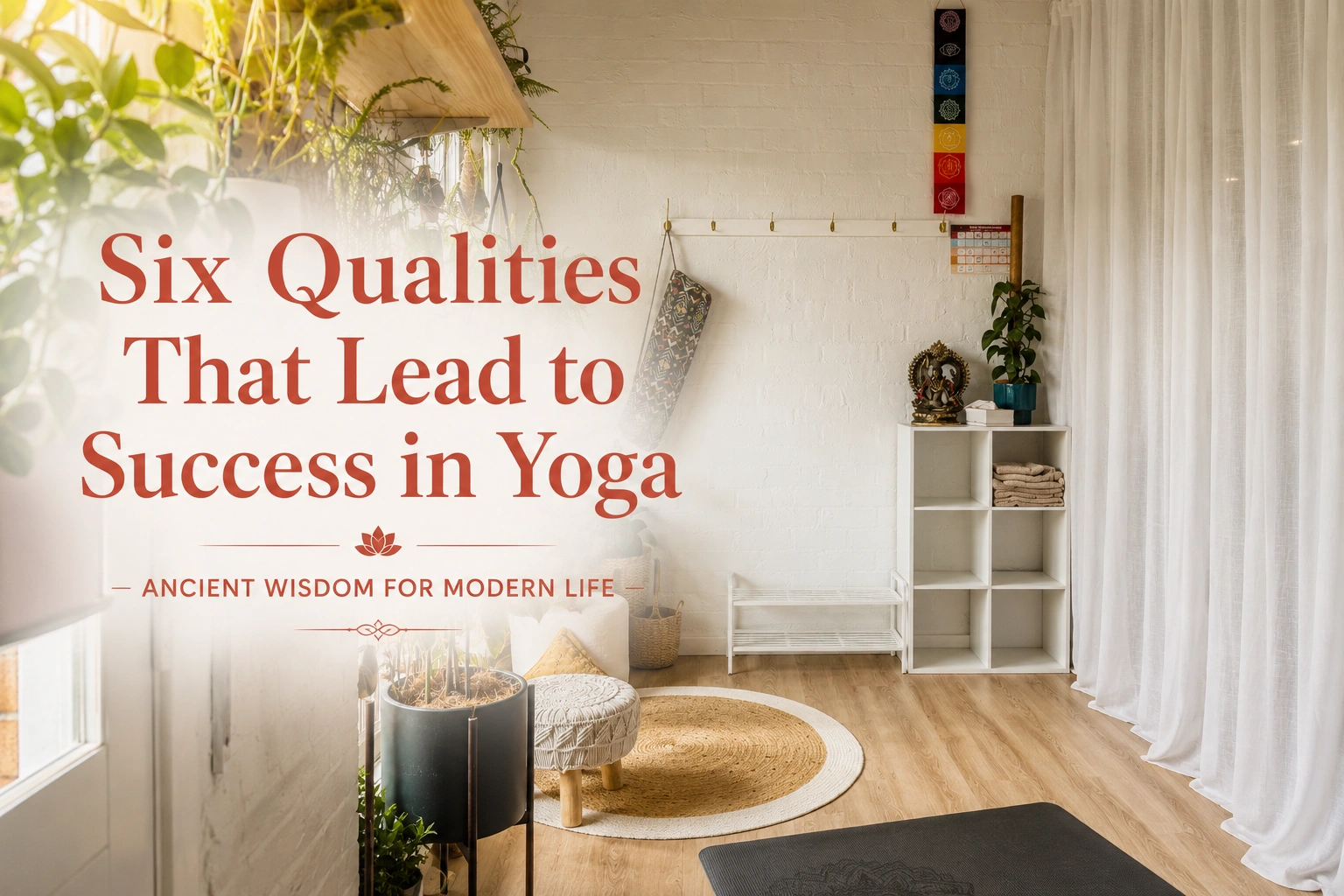
The Hatha Yoga Pradipika teaches that there are six habits that gradually weaken or even “destroy” yoga.
Not because they stop us doing poses. But because they move us further away from awareness.
What Does It Mean to Destroy Yoga?
At first glance, the language sounds dramatic.
Destroy yoga?
But this teaching is not suggesting yoga disappears because we miss a class or lose flexibility. Yoga fades more subtly. It fades when life becomes too full.
- Too noisy.
- Too rushed.
- Too disconnected.
These teachings are not moral judgements. They are observations. Patterns that quietly pull us away from ourselves. And if we pay attention, most of them feel surprisingly familiar.
The Six Habits That Weaken Yoga
- Atyāhāra — Excess Consumption
- Traditionally this referred to overeating.
- But today excess takes many forms.
- Endless scrolling.
- Information overload.
- Always consuming but rarely integrating.
- Filling every spare moment.
- Overcommitting ourselves.
- Even wellness can become another thing we consume.
- When every space is filled, there is little room left to hear ourselves.
- Yoga begins to flourish when we rediscover the difference between more and enough.
- Prayāsa — Overexertion and Forcing
- This teaching refers to excessive effort.
- Pushing beyond what is required.
- Many of us already live this way.
- Work harder.
- Train harder.
- Produce more.
- Improve faster.
- And then we bring that same energy into yoga.
- Forcing flexibility.
- Chasing achievement.
- Treating rest as something earned.
- But yoga reminds us:
- Transformation rarely happens through force.
- It happens through consistency.
- Sustainable practice.
- Returning again and again.
- Prajalpa — Excessive Talking and Distraction
- Prajalpa points to unnecessary noise.
- Not simply speaking.
- But losing ourselves in distraction.
- Constant commentary.
- Notifications.
- Mental clutter.
- The inability to sit quietly.
- We live in a time where silence can feel uncomfortable.
- But awareness often grows in the spaces we stop filling.
- Sometimes yoga looks less like doing.
- And more like listening.
- Niyamāgraha — Rigidity or Losing the Purpose
- This teaching is fascinating.
- It warns against becoming too attached to rules.
- Or neglecting them altogether.
- Discipline matters.
- Routine matters.
- But not when they become another performance.
- Yoga asks us to remember why we practise.
- Not simply whether we completed the checklist.
- Routine becomes powerful when it is an act of self-respect.
- Not self-punishment.
- Jana-saṅga — Company and Environments That Pull Us Away
- We are shaped by what surrounds us.
- Relationships.
- Media.
- Conversations.
- Algorithms.
- Comparison.
- Noise.
- The company we keep influences our inner landscape.
- Protecting practice sometimes means protecting our environment.
- Choosing spaces that support steadiness.
- That nourish.
- That remind us who we are.
- Laulya — Restlessness and Constantly Chasing More
- This may be one of the most modern obstacles of all.
- Always looking for the next method.
- The next teacher.
- The next retreat.
- The next breakthrough.
- But depth requires staying.
- Returning.
- Allowing roots to grow.
- When we are always moving toward the next thing, we rarely arrive where we already are.
- Steadiness allows practice to take root.
Ancient Wisdom for a Modern World
These teachings feel surprisingly contemporary. They remind us:
- Sustainable practice over extremes.
- Routine as self-respect.
- Rest as part of practice.
- Small rituals over occasional intensity.
- A daily walk.
- A breath.
- Five minutes on the mat.
- Closing the eyes.
- Choosing enough.
Yoga was never intended to become another arena for optimisation. Its purpose was always connection.
The Invitation: Cultivate Sthira
The six obstacles described in the Hatha Yoga Pradipika are not meant to create guilt. They are invitations.
- Places to pause.
- Places to notice.
Places to ask: Where am I moving away from myself? Yoga does not ask us to become perfect.
- It asks us to return.
- Again and again.
- To presence.
- To awareness.
- To what matters.
Cultivate Sthira.
Stable • Steady • Strong.
Not through intensity. Not through perfection. But by creating space to return to yourself again and again.
Leave a Comment
You must be logged in to post a comment.