

Who Owns Yoga? Tradition, Cultural Appropriation and an Impermanent Practice
“They come to our ashrams. They ‘study’ our scriptures. They steal our jobs.” I left the comment there. Not because I agree with it, and not because I particularly want to argue with a stranger on the internet. I left it because beneath the accusation sits a genuinely interesting question:
Who owns yoga?
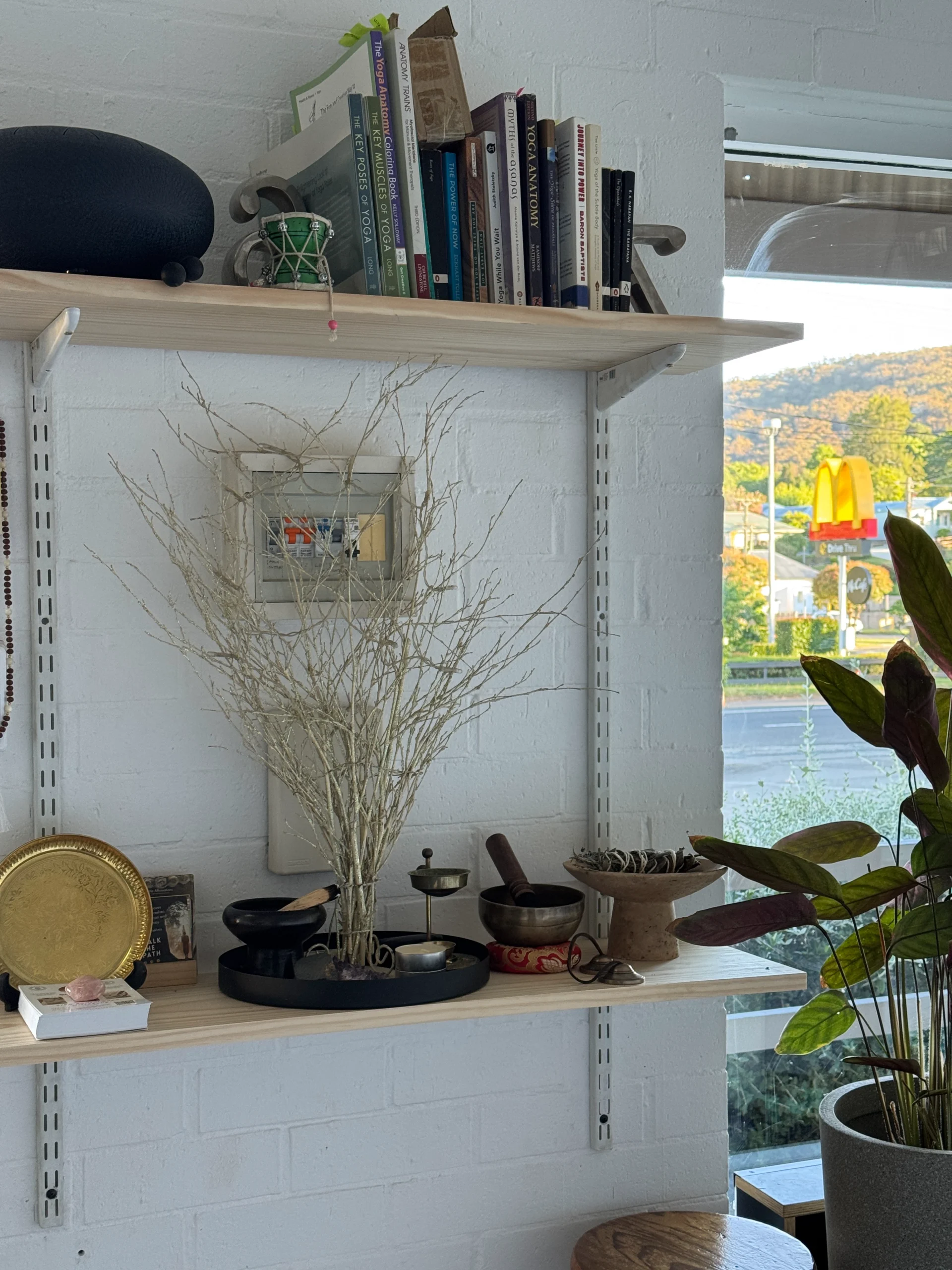
It is a question worth asking, particularly for someone like me — an Australian yoga teacher teaching a tradition that emerged from the Indian subcontinent, here in a small studio in the Southern Highlands of NSW.
And perhaps the question becomes even more interesting when we remember one of the recurring lessons within Indian philosophy itself: everything changes.
Yoga Is Older Than Modern India
We commonly say that yoga “comes from India”, and in everyday language I think that’s perfectly reasonable. But historically, the story is more complicated. Yoga emerged from the cultures and philosophical traditions of the Indian subcontinent, long before the borders of the modern Republics of India and Pakistan existed.
The Indus or Harappan civilisation flourished across a vast region that today lies principally within Pakistan and northwestern India. Archaeological objects from this civilisation most famously the so-called Paśupati seal — have sometimes been interpreted as possible evidence of precursors to later yogic practices.
That interpretation remains debated. We simply don’t possess enough evidence to confidently draw a straight line from an Indus Valley figure sitting in an unusual posture to the yoga traditions that appeared in later texts. And I think admitting what we don’t know is just as important as celebrating what we do.
Later Sanskrit traditions speak of Bhārata and Bhāratavarṣa, concepts of geography, civilisation and cultural identity that are themselves far older than today’s national boundaries. So when I describe yoga as Indian, I mean something much richer than a modern passport or a line drawn on a map. I mean the extraordinary civilisational traditions of the Indian subcontinent from which yoga emerged and through which it continued to develop.
There Has Never Been Just One Yoga
This is where the idea of someone simply “owning yoga” becomes difficult for me. Yoga has never been one completely fixed thing. The ideas we encounter in the Vedas and early Upaniṣads aren’t identical to the system described in Patañjali’s Yoga Sūtras. The Bhagavad Gītā speaks about yoga in multiple ways — including action, knowledge and devotion.
Tantric traditions contributed other practices and ways of understanding the body. Bhakti traditions emphasised devotion. Later Haṭha Yoga traditions developed techniques involving posture, breath, mudrā, bandha and the subtle body. Teachers, schools and philosophical traditions disagreed with each other, influenced each other and continued developing new approaches.
Even what most people around the world now recognise as a “yoga class” is the result of much more recent evolution. There was never a single moment when somebody finished creating Yoga and put a lid on the box.
Yoga Survived Because It Was Shared
This is what struck me about the quotation marks the commenter placed around the word “study.” Because studying is precisely what I believe a yoga teacher should be doing. Yoga survived because people taught it.
- Teacher to student.
- Generation to generation.
- Community to community.
- Eventually, country to country.
Transmission is one of the reasons we still have access to these ideas at all. My relationship with yoga certainly didn’t end when I received a teaching certificate.
I study Sanskrit. I read and return to yoga’s philosophical and religious texts. I am fascinated by the Purāṇas and the stories surrounding deities such as Viṣṇu, Śiva and Gaṇeśa. I have travelled to India and spent time in ashrams. I continue to learn from teachers rather than pretending that becoming a teacher meant I stopped being a student.
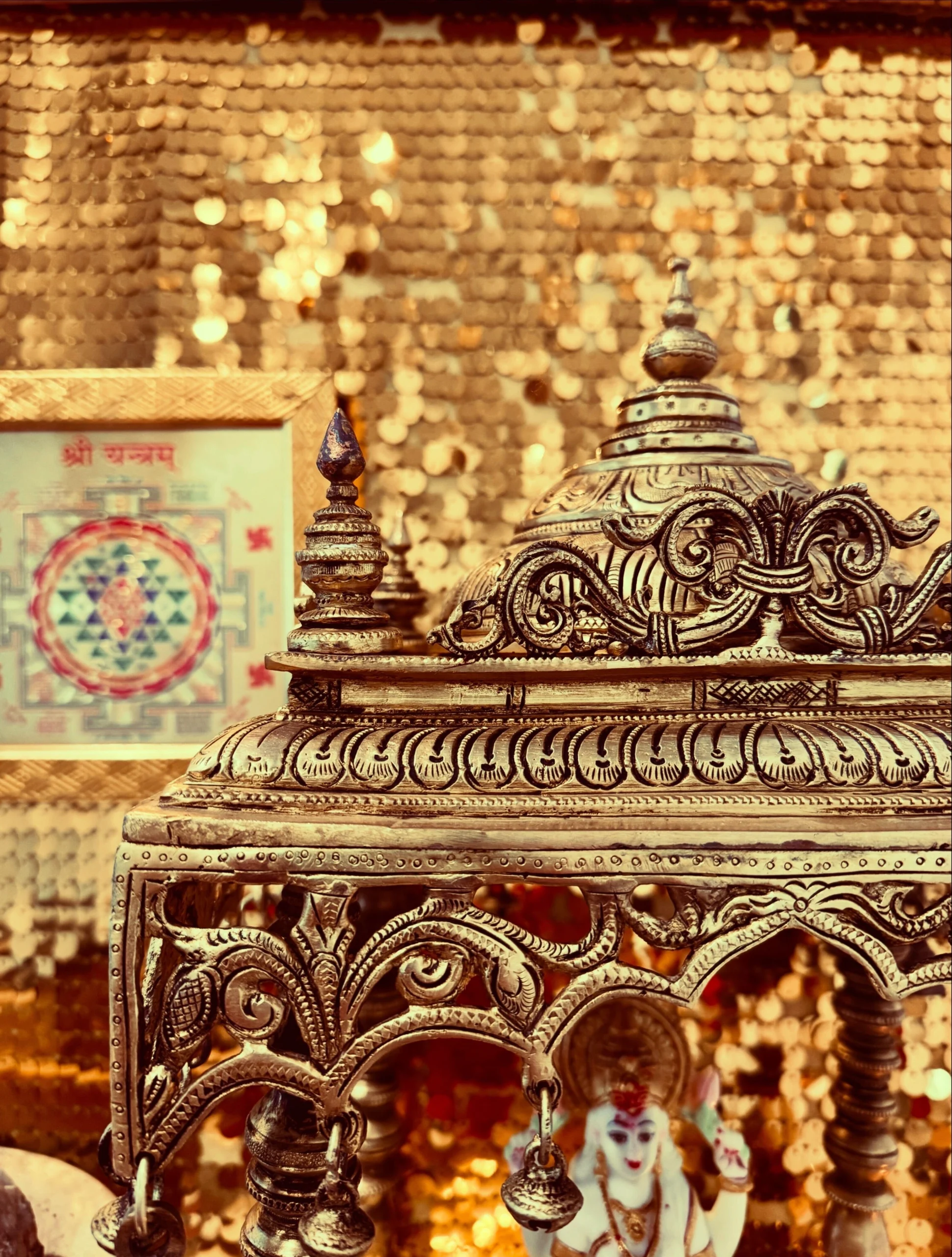
Only recently, I spent a weekend visiting an exhibition devoted to Viṣṇu and the extraordinary ways he has been represented and understood across centuries. None of this makes Indian culture mine. It doesn’t make me Indian. It doesn’t give me ownership of yoga.
It makes me a student of it.
And I hope I remain one
What About Cultural Appropriation in Yoga?
“Cultural appropriation” is a term I personally struggle with. Not because exploitation doesn’t exist. It clearly does. Someone can take knowledge while deliberately obscuring where it came from. Sacred symbols can become fashionable decoration stripped of meaning. Complex traditions can be reduced to marketable products. Teachers and communities can be ignored while somebody else profits from a simplified version of their knowledge.
Those are legitimate things to question. But I struggle with the much broader proposition that cultures themselves can be neatly fenced off and owned. Human history simply doesn’t seem to work that way.
- Ideas travel.
- Languages borrow from one another.
- Food travels.
- Music travels.
- Religions travel.
- Philosophies travel.
- People travel.
- And everything changes in the process.
Buddhism Gives Us an Interesting Example
Buddhism emerged on the Indian subcontinent and then travelled enormously. It moved into Sri Lanka and Southeast Asia. It travelled through Central Asia into China.
From China it reached Korea and Japan. Other forms travelled into Tibet and the Himalayan regions. Those traditions didn’t remain identical. They encountered different languages, cultures, philosophies, rituals and artistic traditions. New schools emerged. Texts were translated. Practices changed. Would we now tell a Japanese Zen practitioner that Buddhism doesn’t belong in Japan because its historical origins lie elsewhere? The question becomes remarkably complicated. And perhaps that’s because culture isn’t an object that behaves particularly well when we try to establish ownership over it.
Anitya — Everything Changes
One of the ideas I find useful here is anitya — impermanence. Nothing remains exactly as it was. That includes us. It includes societies. And it includes traditions. This doesn’t mean history becomes irrelevant or that we can do whatever we like with another culture’s traditions.Quite the opposite.
Understanding where something came from gives what we practise greater depth. But respecting the past doesn’t necessarily require freezing it there. Yoga has survived because it has been continually practised, questioned, interpreted and transmitted. Perhaps change isn’t necessarily evidence that a tradition has been destroyed. Sometimes change is evidence that it is still alive.
So What Does Respectful Yoga Look Like?
For me, the questions surrounding modern yoga are therefore less about permission and more about responsibility. Are we honest about where these practices came from? Do we acknowledge yoga’s roots in the Indian subcontinent?
- Are we curious enough to look beyond āsana?
- Do we acknowledge our teachers?
- Do we distinguish between something we’ve studied deeply and something we’ve
- only recently encountered?
- Can we say “I don’t know”?
- Can we appreciate a tradition without pretending to own it?
And, importantly, can we remain students even when we become teachers? Those questions are much more useful to me than trying to determine who is and isn’t culturally permitted to practise yoga.
An Ancient Tradition in a Small Studio in Mittagong
And so here I am. Thousands of kilometres from the Indian subcontinent, teaching yoga in Mittagong in the Southern Highlands of NSW. Sometimes that means āsana. Sometimes it means breathing. Sometimes we encounter Sanskrit, mantra, meditation, philosophy or one of the extraordinary stories that has survived an equally extraordinary journey through history.
Sthira Yoga Academy isn’t an Indian ashram. I don’t pretend that it is. It’s a small Australian yoga studio attempting to engage seriously and respectfully with ancient traditions while recognising that all of us are living firmly in the 21st century. I actually enjoy that tension. Because traditions remain alive when people continue encountering them.
- We study them.
- We question them.
- We practise them.
- We share them.
- And inevitably, we change them.
Perhaps our responsibility isn’t to preserve yoga untouched under glass. Perhaps it is to receive it respectfully, understand as much as we can acknowledge where it came from, and pass it on with care. And then accept that, like everything else, it will continue to change.
Stable • Steady • Strong
Leave a Comment
You must be logged in to post a comment.