Quick Restorative Yin – Rest & Digest Before Bed

What Is Quick Restorative Yin? Quick Restorative Yin is a short, calming sequence designed to help the body
admin
May 24, 2026
Quick Restorative Yin

What Is Quick Restorative Yin?

Quick Restorative Yin is a short, calming sequence designed to help the body soften and the nervous system settle before sleep. Using long-held, supported floor and bed-based postures, the practice encourages the body to shift into a more restful “rest and digest” state. This sequence is intentionally simple. You can practise it beside your bed or directly on your mattress using pillows, cushions, or folded blankets for support. It’s less about stretching deeply and more about unwinding tension, slowing the breath, and preparing the body and mind for sleep.

Benefits of This Practice

  • Helps calm the nervous system before bed
  • Encourages deeper breathing and relaxation
  • Releases tension through the hips, lower back, and spine
  • Supports circulation and gentle decompression after long days
  • May help quiet a busy or overstimulated mind
  • Creates a healthy evening ritual away from screens and stress

Before You Begin – Setup & Props

Ideal Time of Day This sequence is best practised in the evening, shortly before sleep. It works beautifully after a warm shower, soft lighting, herbal tea, or gentle music.
The intention is not to “work out,” but to slowly transition from the activity of the day into rest.
Simple Props You Need You don’t need traditional yoga props for this practice. Use whatever you have nearby:

  • Pillows
  • Cushions
  • Folded blankets
  • A wall or the side of your bed
  • Comfortable clothing

Step-By-Step Quick Restorative Yin Sequence

Step By Step Quick Restorative Yin Sequence
  1. Viparīta Karaṇī (Legs Elevated)

Begin on the floor beside your bed or near a wall. Elevate the legs either:

  • up the wall, or
  • resting over the side of the bed

Allow the arms to soften by your sides and let the breath become slow and natural. This gentle inversion helps calm the nervous system and prepare the body for rest.

Hold: 2–3 minutes

  1. Half Happy Baby Pose

Come onto your bed and hug one knee toward the chest. Hold behind the thigh, shin, or outer foot while the opposite leg relaxes long. Keep the jaw soft and shoulders relaxed.

Hold: 2–3 minutes each side

  1. Figure 4 Stretch

Cross one ankle over the opposite thigh, creating a gentle opening through the hips and glutes.
You may stay here or lightly draw the legs toward you if it feels comfortable.

Hold: 2–3 minutes each side

  1. Supine Twist with Figure 4 Legs

Keeping the Figure 4 shape, allow the legs to gently fall across the body into a reclining twist. Extend the arms wide and soften into the bed.

Hold: 2–3 minutes each side

  1. Thrashing Bug

Return to centre and gently shake, wiggle, or flail the limbs around. Let the body move freel and intuitively, as though shaking off the residue of the day. There is no perfect way to do this.

Continue: 30–60 seconds

  1. Repeat on the Second Side

Move through:

  • Half Happy Baby
  • Figure 4
  • Supine Twist with Figure 4 legs

on the opposite side. Take your time and move slowly.

  1. Final Thrashing Bug

Come back to centre and once again shake out the limbs, soften the jaw, and let the whole body decompress. Think of this as releasing tension, stagnant energy, and mental noise before sleep.

Continue: 30–60 seconds

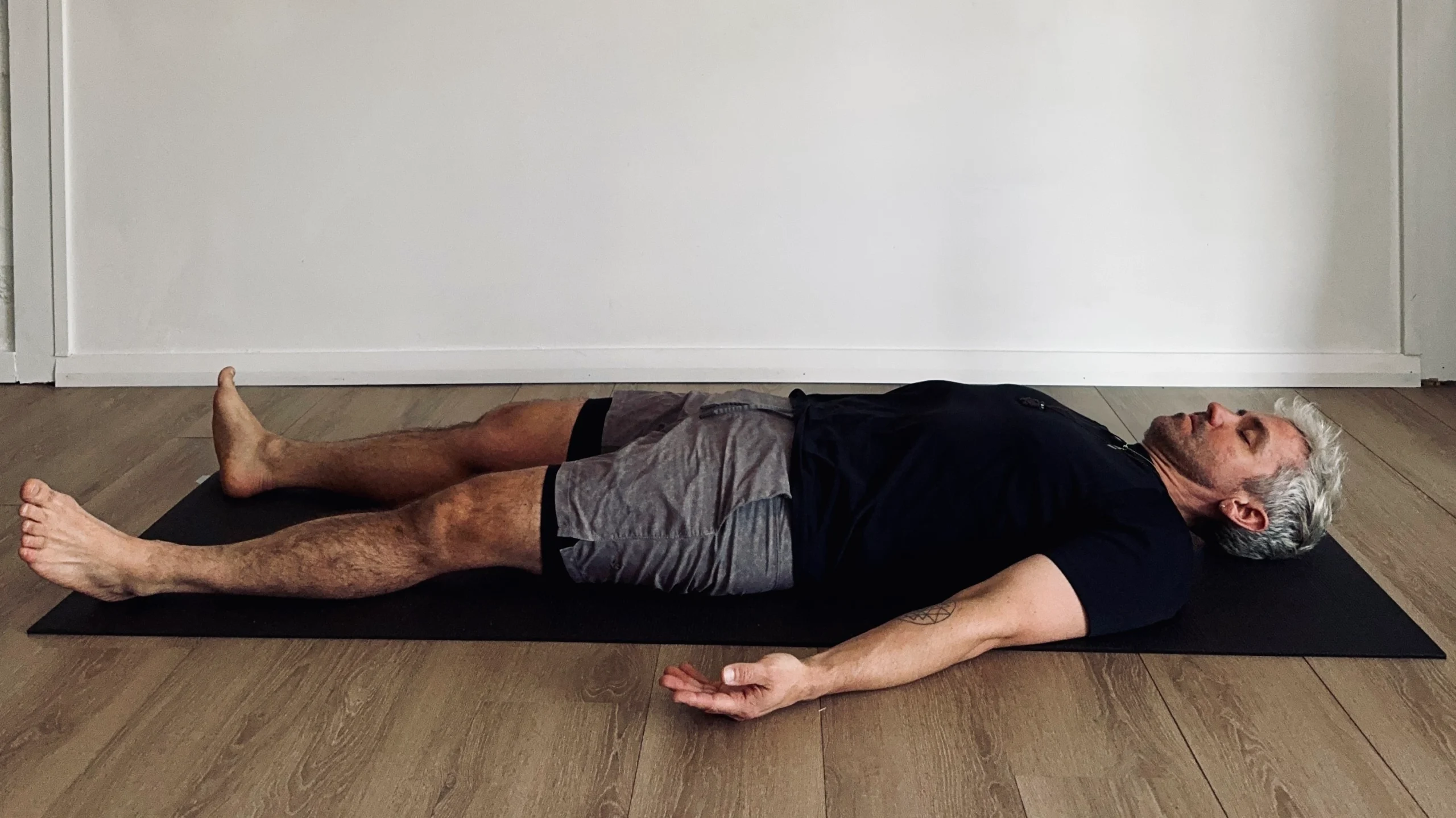
  1. Supta Baddha Koṇāsana (Reclined Bound Angle Pose)

Bring the soles of the feet together and allow the knees to soften outward. Place pillows or cushions beneath the thighs if needed. Rest one hand on the belly and one on the heart. Allow the breath to become effortless as you settle into stillness.

Hold: 3–5 minutes or until sleep arrives.

Frequently Asked Questions (FAQs)

How long should I hold each pose in Quick Restorative Yin?

Around 2–3 minutes per pose is a wonderful starting point. If a posture feels particularly nourishing, you can stay longer.

Can I do this sequence every day?

Yes. Because the practice is gentle and restorative, many people benefit from using it nightly as part of a calming bedtime routine.

Do I need special props for restorative yin?

No. Pillows, blankets, and your bed are more than enough for this sequence.

Is this suitable for beginners or people with back pain?

Generally yes, especially because the shapes are supported and low intensity. However, always move gently and avoid anything that causes sharp or worsening pain.
If you have significant injuries or medical concerns, consult a healthcare professional before beginning any movement practice.

What’s the difference between yin and restorative yoga?

Yin Yoga uses longer-held poses to gently stress connective tissues such as fascia, ligaments, and joints. Restorative Yoga is even softer, using heavy support andminimal effort to encourage deep relaxation and nervous system recovery.
This sequence blends elements of both approaches into a practical evening ritual.

About the Author

my-yoga-journey-travis-chamber-in-rishikesh
Travis Chambers
Founder, Sthira Yoga Academy

Travis teaches through the lens of sthira stable, steady, strong encouraging students to build inner strength and clarity on and off the mat. Forever a student himself, he weaves practice, philosophy, and presence into everything he shares.

Leave a Comment

Sangha in a Modern World – Community Yoga in Mittagong

Sangha in a Modern World – Community Yoga in Mittagong

Why I Created More Than Just a Yoga Studio There is a Sanskrit word often used in

The 7 Chakras & The Subtle Body

The 7 Chakras & The Subtle Body

The chakra system is one way of understanding the subtle body — the layers of experience that

Can Beginners Join a 200-Hour Yoga Teacher Training?

Can Beginners Join a 200-Hour Yoga Teacher Training?

There’s a common belief that you need to be flexible, experienced, or somehow “good at yoga” before