
There is a beautiful saying in yoga: “When the student is ready, the teacher appears.”
Recently I travelled to Byron Bay for a week of rest, practice and learning. Rather than taking a holiday from yoga, I became a student again. I attended classes, explored new ideas, found inspiration, purchased my first professional harmonium and began studying Vedic chanting with Alice. For me, this isn’t about becoming a musician. It is about becoming a better yoga teacher.
At Sthira Yoga Academy in Mittagong my vision has always been much larger than teaching physical
postures. Yoga is an entire tradition that includes movement, breath, meditation, philosophy, community
and sound. This next chapter allows me to share a little more of that tradition with our Southern Highlands community.
Why Mantra Matters in Yoga
Many people first encounter yoga through movement. But for thousands of years, yoga has also been
practised through sound. Mantra is not simply singing.
In the Vedic tradition, the vibration, rhythm and pronunciation of Sanskrit are considered practices that
cultivate attention, steadiness and presence. Whether viewed spiritually or simply through the lens
of modern neuroscience, slowing the breath and producing sustained vocal sound can encourage a
calmer nervous system and greater feelings of connection. This is one reason chanting has remained part of yoga traditions for centuries.
My New Bhava Harmonium
One of the highlights of my Byron Bay trip was purchasing a handcrafted Bhava Harmonium from
Harmonium Australia.
A finely tuned instrument does more than sound beautiful. It supports accurate pitch, smoother accompaniment and creates an atmosphere that invites students to settle into practice.
I wanted to invest in something that will serve our community for many years. Like every part of yoga, quality matters—not because we seek perfection, but because we wish to create an experience that helps people arrive fully in the present moment.
Continuing to Learn
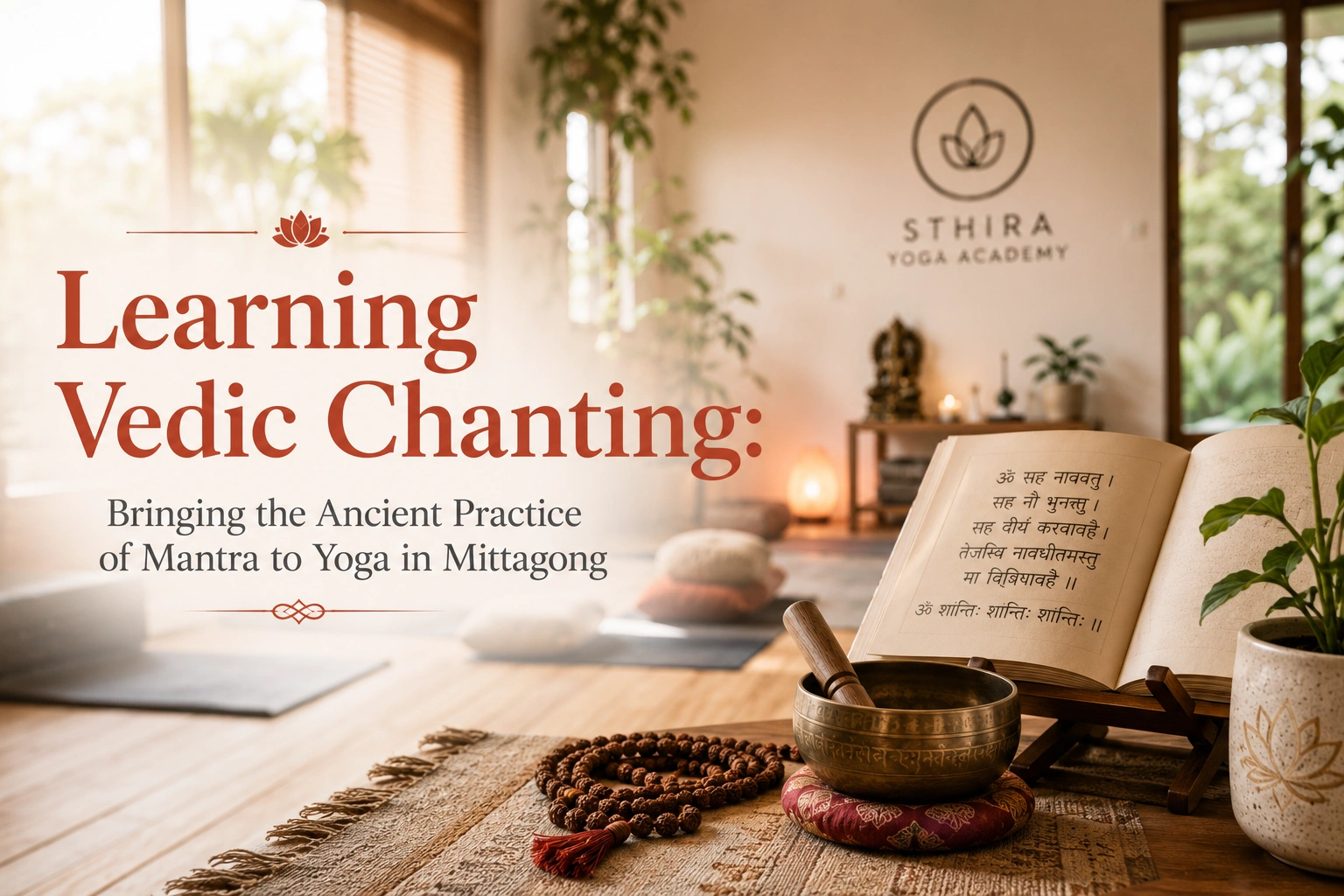
One thing I admire about great yoga teachers is that they never stop being students. That is why I have begun taking Vedic chanting lessonswith Alice.
Learning proper pronunciation, rhythm and traditional melody takes time. Rather than simply playing a harmonium, I want to understand the tradition well enough to share it respectfully and confidently.
Every lesson reminds me that teaching yoga is not about already knowing everything. It is about remaining curious enough to keep learning.
Our First Sunday Morning Chant
Beginning this Sunday, our Yoga Church community will spend the first few weeks learning one simple chant together.
Om Gam Ganapataye Namah
Phonetic pronunciation
| Om | Gam | Ga-na-pa-ta-ye | Na-mah |
| (Ohm) | (Gum — with a soft “uh” sound) | (Guh-nuh-puh-tuh-yay) | (Nuh-mah — the final “h” is softly breathed rather than strongly pronounced.) |
Meaning
| Om | Gam | Ganapataye | Namah |
| The primordial sound representing wholeness and unity. | The bija (seed) mantra associated with Lord Ganesha. | “To Ganapati” — another name for Ganesha, the remover of obstacles and the lord of beginnings. | “I bow with respect.” |
A simple translation is:
“I bow to Lord Ganesha, remover of obstacles, with humility and respect.”
Many traditions also pair this with:
Ganesha Sharanam Pronunciation Guh-NAY-shah Shah-ruh-num
Meaning:
“I take refuge in the wisdom and guidance of Ganesha.” Together they create a gentle call-and-response chant often sung with just two chords on the harmonium, making it ideal for beginners.
More Than a Yoga Studio
Since opening Sthira Yoga Academy, one dream has continued to grow. I don’t simply want to build another yoga studio. I want to help cultivate a genuine yoga community.
- A place where people know one another.
- Where they practise together.
- Learn together.
- Drink chai together.
- Watch documentaries together.
- Celebrate milestones together.
- Support each other through life’s more difficult seasons.
Yoga has always been about relationship. Not simply between teacher and student, but between people.
Also Read: Powerful Mantras: Types, Benefits & How to Use Them
A Vision for the Southern Highlands
When people think about yoga in Australia, Byron Bay often comes to mind. After spending time there as a student, I came home inspired—not because I want to copy Byron, but because I believe the Southern Highlands can develop its own unique yoga culture.
We already have beautiful landscapes, welcoming communities and people seeking slower, more meaningful ways of living.
My hope is that over the coming years, the Southern Highlands becomes recognised as a place where people come not only to escape the city, but also to deepen their yoga practice. Every class, every conversation, every workshop and every shared chant helps build that vision.
Stable. Steady. Strong.
One practice at a time
Leave a Comment
You must be logged in to post a comment.