

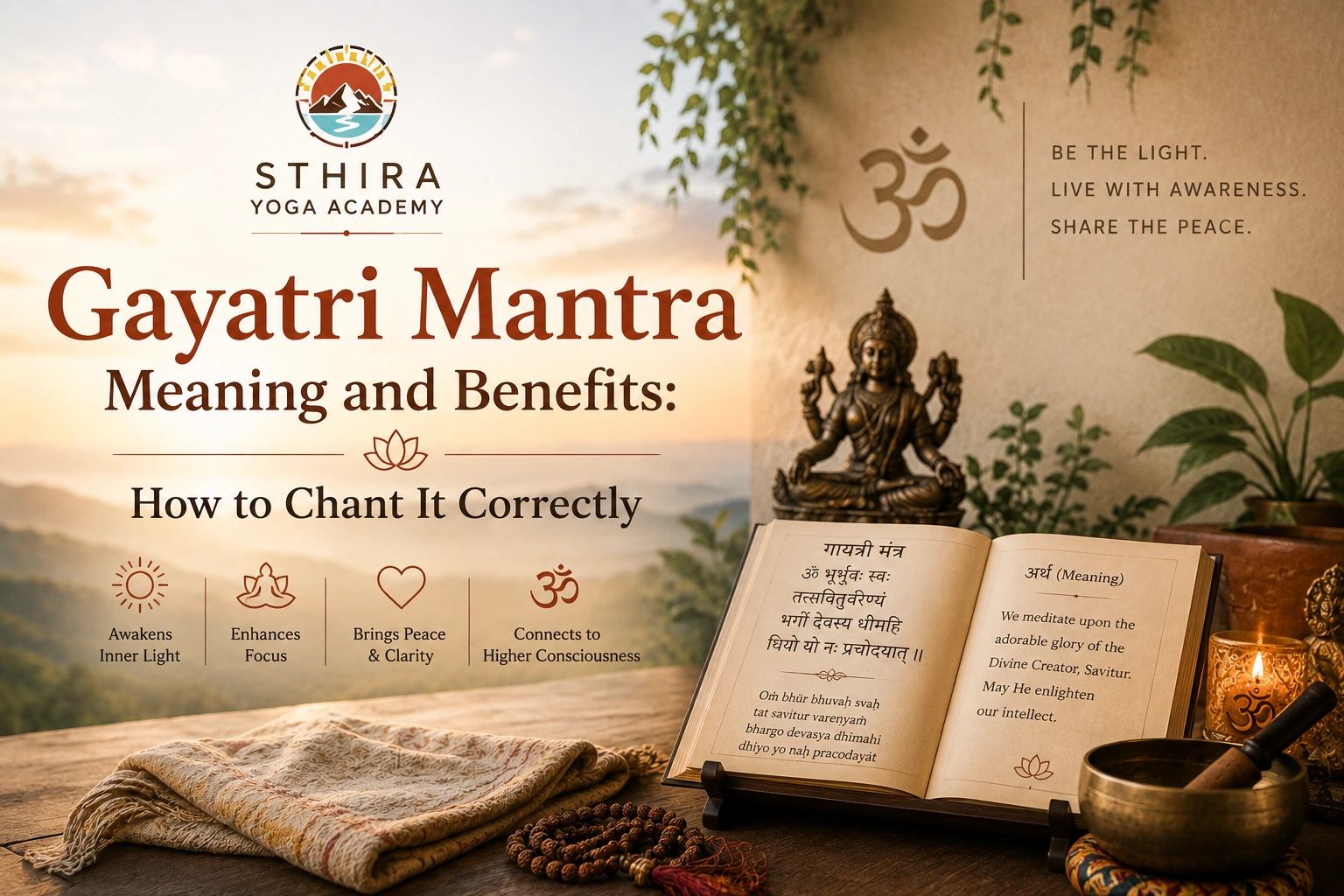
Before the studio becomes busy, I often travel there in the early hours for my personal practice. This includes meditation, pūjā and āratī dedicated to Goddess Lakshmi.
After meditation, I chant the Gayatri Mantra six times. This ancient prayer helps me move from inner stillness into devotion and then into the activity of the day.
What Is the Gayatri Mantra?
The Gayatri Mantra is one of the oldest and most revered mantras in the yoga tradition. It appears in the Ṛg Veda at 3.62.10 and was composed in Vedic Sanskrit more than 3,000 years ago.
The Gayatri Mantra meaning centres on divine light, awakened understanding and the guidance of our inner intelligence. A simple expression of the meaning of the Gayatri Mantra is:
We meditate upon the sacred radiance of Savitṛ. May that divine light inspire and guide our understanding.
Who Is the Gayatri Mantra Dedicated To?
The mantra is dedicated to Savitṛ, a Vedic solar deity associated with illumination, inspiration and the power that sets life into motion.
The sun is our primary natural source of illumination, warmth and energy. It supports the rhythms of the day, the seasons and almost every form of activity on Earth.
Within the mantra, sunlight also becomes a symbol of inner illumination—the light through which confusion may become understanding and unconscious action may become conscious choice.
Why Is the Gayatri Mantra Considered Powerful?
The mantra brings together sound, breath, rhythm, concentration and meaning. During chanting, the mind is given one clear point of focus. The measured rhythm can settle the breath, while the meaning directs our attention towards clarity and wisdom.
Its power also comes from its extraordinary continuity. Practitioners have preserved and recited this verse for thousands of years. Each time we chant it, we participate in that living tradition.
Gayatri Mantra Lyrics in Sanskrit
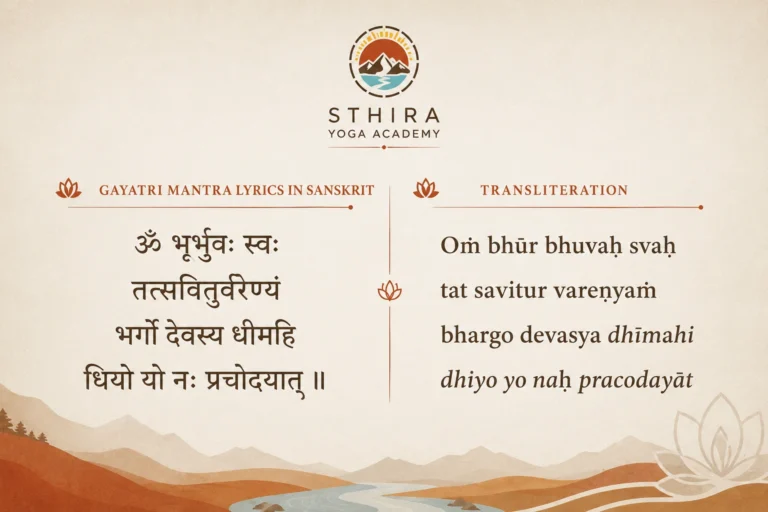
Devanagari
ॐ भूर्भुवः स्वः
तत्सवितुर्वरेण्यं
भर्गो देवस्य धीमहि
धियो यो नः प्रचोदयात् ॥
Transliteration
Oṁ bhūr bhuvaḥ svaḥ
tat savitur vareṇyaṁ
bhargo devasya dhīmahi
dhiyo yo naḥ pracodayāt
The original Vedic verse begins with tat savitur vareṇyam. In common practice, it is preceded by Oṁ and the three sacred utterances bhūr, bhuvaḥ, svaḥ, often understood as earth, the space between and the celestial realm.
Gayatri Mantra Pronunciation Guide
A simple pronunciation guide is:
Om bhoor bhu-vah svah
tut sa-vee-toor va-ren-yum
bhar-go day-va-sya dhee-ma-hee
dhee-yo yo nah pra-cho-da-yaat
Helpful points include:
- Bhūr has a long “oo” sound.
- Dhī has a long “ee” sound.
- Naḥ ends with a soft breath rather than a hard English “h.”
- Yāt has a long “aa” sound.
Pronunciation is important, but avoid creating unnecessary tension in the mouth, jaw or throat. Listen carefully, practise slowly and allow accuracy to develop through repetition.
The mantra is composed in gāyatrī metre, not anuṣṭubh. Gāyatrī metre traditionally contains 24 syllables arranged as three lines, or pādas, of eight syllables each. Anuṣṭubh, by comparison, generally contains four lines of eight syllables.
Allow the three lines to establish the pace:
tat savitur vareṇyaṁ
bhargo devasya dhīmahi
dhiyo yo naḥ pracodayāt
Avoid rushing the words to fit the mantra into a single breath. Each line can be chanted on its own comfortable exhalation.
Gayatri Mantra Audio
Listen to my recording below to hear the pronunciation, pace and rhythm I use in my own practice.
Begin by listening without trying to chant. Then join one line at a time, allowing the pronunciation and metre to become familiar before chanting the complete mantra independently.
The Gayatri Mantra in My Personal Practice
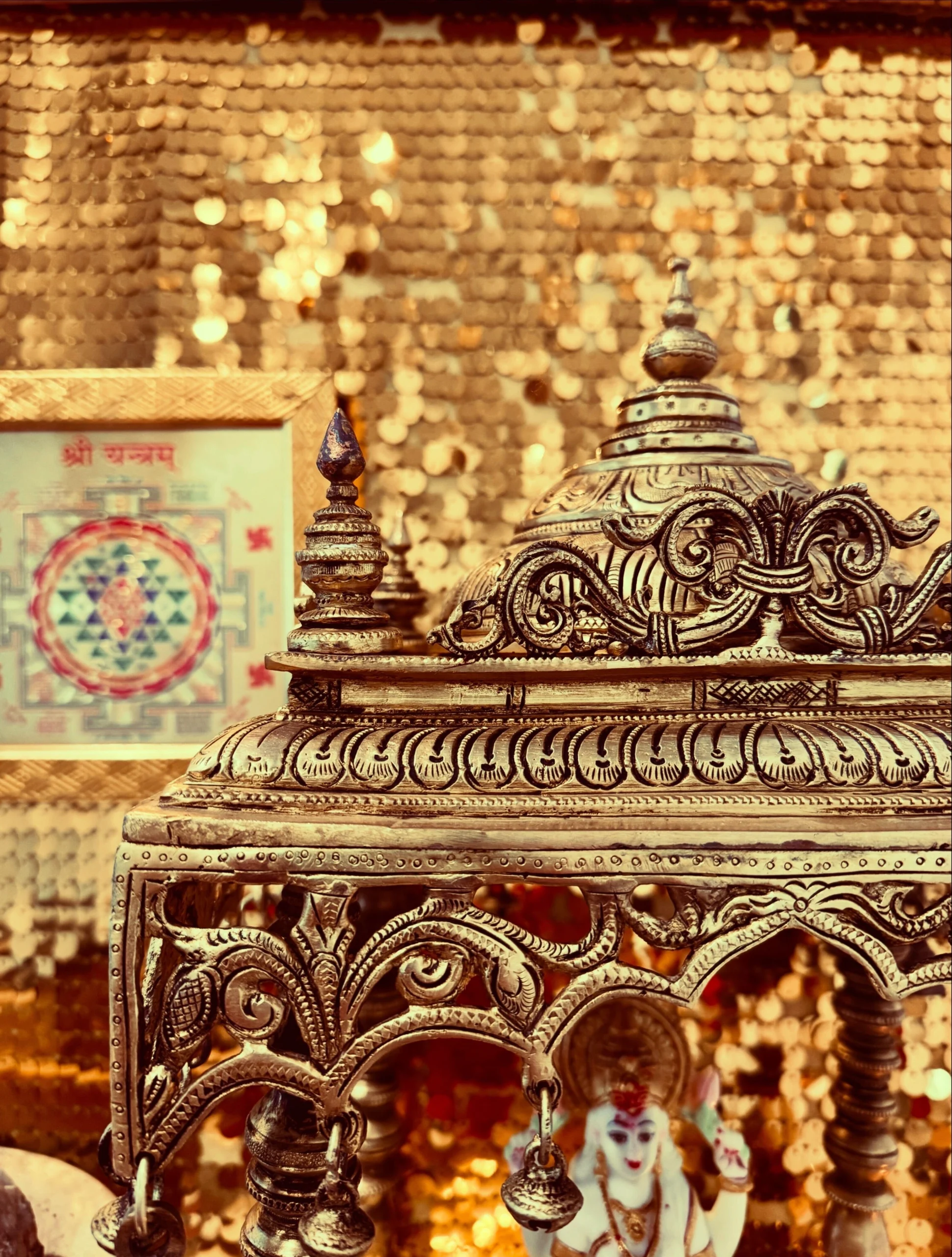
My early-morning pūjā and āratī are offered to Goddess Lakshmi and informed by the Sattva Yoga āratī tradition. The practice includes offerings such as water, flowers, food, light, fragrance and tilaka. Each physical offering becomes an expression of attention, gratitude and devotion.
A verse that reflects the spirit of these simple offerings appears in Bhagavad Gita 9.26:
Patraṁ puṣpaṁ phalaṁ toyaṁ
yo me bhaktyā prayacchati
tad ahaṁ bhaktyupahṛtam
aśnāmi prayatātmanaḥ
Whoever offers me with devotion a leaf, a flower, a fruit or water I receive that loving offering from one whose heart is sincere. The verse specifically names a leaf, flower, fruit and water. Incense, tilaka and light come from the broader tradition of pūjā.
What matters is not the expense or grandeur of the offering. Even something simple can become sacred when it is offered with genuine attention.
Benefits of Chanting the Gayatri Mantra
Traditional practitioners associate the Gayatri Mantra with wisdom, clarity and spiritual illumination.
Regular chanting may help us to:
- Establish a consistent daily ritual
- Focus and steady the mind
- Coordinate breathing, speech and awareness
- Create a conscious pause before beginning the day
- Reflect before acting
- Develop familiarity with Sanskrit rhythm and sound
These are contemplative benefits rather than promises of medical treatment.
How Gayatri Mantra May Support Mental Calmness
Chanting gives a busy mind something precise to follow. We listen, breathe, pronounce the words and return to the next repetition. When the mantra is chanted slowly and without strain, its repetition may encourage steadier breathing and reduce our engagement with distracting thoughts.
The aim is not to force the mind into silence. It is to create conditions in which agitation can gradually settle.
Best Time to Chant the Gayatri Mantra
The mantra is traditionally associated with the transitional periods of dawn, midday and dusk. These meeting points are known as sandhyā.
However, a regular practice at a realistic time is more valuable than an ideal routine that cannot be maintained.
Gayatri Mantra in the Morning
Morning chanting can establish the quality with which we enter the day. The mind is often quieter before responsibilities and conversations begin competing for our attention.
This is why my personal practice takes place in the early hours at the studio. It gives me time to meditate, make my offerings and chant before moving into teaching and daily activity.
Gayatri Mantra at Sunrise
Sunrise creates a natural relationship between the mantra and the physical world. As darkness gives way to visible form, the illuminating energy of Savitṛ becomes something we can directly experience.
There is no need to stare at the sun. Simply allow the changing morning light to support your contemplation.
Gayatri Mantra at Sunset
At sunset, the mantra can become a practice of reflection and integration.
We might consider what became clear during the day, where confusion influenced our actions and what we are ready to release before resting.
Can You Chant the Gayatri Mantra at Night?
Yes. Although sunrise and sunset carry particular traditional significance, the mantra may also be chanted at night. Use a gentle pace and allow the practice to become quieter. Mental repetition may be especially suitable immediately before sleep.
Gayatri Mantra and Mala Chanting
A mālā provides a simple way to count repetitions without distracting the mind. Each bead represents one complete recitation.
A mālā is helpful, but it is not compulsory. My own practice currently includes six repetitions. Consistency and attention are more important than completing a particular number.
How to Use a Mala for Gayatri Mantra Japa

Begin with the bead beside the larger guru bead.
- Settle your posture and breathing.
- Chant the complete mantra once.
- Move to the next bead.
- Continue without rushing.
- When you return to the guru bead, do not cross over it.
- To complete another round, turn the mālā around and continue in the opposite direction.
How Many Beads Should You Use?
A traditional japa mālā contains 108 counting beads and one guru bead. Smaller mālās may contain 54 or 27 beads. Beginners do not need to begin with 108 repetitions. Six, nine, 12 or 27 attentive repetitions may be more appropriate.
Why Is 108 Used in Mantra Chanting?
The number 108 carries many layers of sacred and symbolic meaning within Indian traditions. It appears in prayer, cosmology, lists of divine names and contemplative practices.
A complete round also provides enough time for the mind to move beyond its initial restlessness and settle into the rhythm of the mantra.
How to Choose a Mala for Mantra Meditation
Mālās may be made from rudraksha, tulsi, sandalwood, crystal, lotus seed or other natural materials.
Choose one that feels comfortable and appropriate to your practice. For a Lakshmi-oriented practice, crystal or lotus seed may hold particular significance, but the material is less important than the sincerity with which it is used.
Final Thoughts on the Gayatri Mantra
The Gayatri Mantra brings together sunlight and insight, ancient tradition and personal experience.
We contemplate the radiance that illuminates the world and ask that the same light awaken our understanding. My six morning repetitions form one small part of my practice, but they help connect the stillness of meditation with the devotion of pūjā and the responsibilities of the coming day.
Begin slowly. Learn the sounds, understand what you are chanting and leave a short period of silence after your final repetition.
Frequently Asked Questions
Begin with three, six, nine, 12 or 27 repetitions. A traditional complete round contains 108 repetitions.
Yes. A short, consistent daily practice is often more beneficial than occasional long sessions.
Yes. Its rhythm and meaning provide a stable focus for meditation. It may be chanted aloud, whispered or repeated mentally.
A mālā traditionally contains 108 counting beads. Completing the full round gives the mind time to settle into sustained concentration, while the number itself carries extensive sacred significance within Indian traditions.


Leave a Comment
You must be logged in to post a comment.